Monday, May 23, 2011

Miracle's Boys by Jacqueline Woodson

Woodson, J.  (2000).  Miracle's Boys.  New York:  G.P. Putnam's Sons.  131 pages, $15.99

Ty'ree, Charlie, and Lafayette are three brothers who need each other.  They lost both of their parents, and if things go wrong, they will be separated.  Will they find the love and strength within each other to do what they need to do so that they can stay together?

Miracle's Boys is about three brothers:  Ty'ree, Charlie, and Lafayette.  Lafayette wishes things with his family were the way they used to be:  Mama alive and watching them, making sure they as a family have everything they need; Ty'ree going to college and not having to worry about making ends meet and keeping the family together; and Charlie back to his normal self and not being so mean and rude all the time.  Even though his daddy died before he was born, Mama and his brothers were happy and helped each other, but since Mama died nothing is the same.  Ty'ree is always tired from work and worrying about keeping the three of them together and having enough money to pay the bills and maybe something a little extra sometimes.  Charlie is back from juvenile hall, and since his return he is always mean, rude, and disrespectful.  Lafayette does everything he can to stay out of trouble and not be a burden to Ty'ree.  He wants to stay with his brothers, but he wants things to be the way they were.  He misses Mama, and only has one picture of her because Charlie burned all the others.  It seems as though the three boys always seem to have something that burdens them when all they're trying to do is stay together.  This is especially true when Charlie gets arrested again, which really worries Ty'ree and Lafayette.  When they go to the police station to see Charlie, he tell his brothers that he had no idea that Aaron, his (supposed) friend, was going to be initiated into a gang.  Charlie didn't want to have any part in it, but was there and was beat up by one of the members of the gang.  He now knows that what Ty'ree would tell him about Aaron was true:  that he was no good to be around.  The brothers walk home after the police officer warned them to stay out of trouble.  Lafayette, while looking at the picture of Mama, remembers that in his had he was holding a promise to her and was about to give it to her.  He was going to promise her not to fight with Charlie.  How could he have forgotten that?  Lafayette makes an effort to talk to Charlie and try to get things back like they used to be...not fighing all the time like they did but also not being rude and disrespectful to each other.  He feels that he needs to keep his promise to Mama, not just because he was going to promise her but because he doesn't want him and his brothers to be separated.  That is definitely something Mama would not have wanted.

While I was reading, I kept expecting Charlie to get arrested again and sent back to juvenile hall, but I'm so glad that the officer made him understand the severity of what he did and let him off with a warning.  I'm glad that the brothers got to stay together, and I think that they'll be fine.  I think Charlie realized just how important it is to have his family with him and that he needs them just as much as they need him.  I really enjoyed the book.  It brought me close to tears.  The title refers to the boys' Mama.  Her name was Milagros, which means miracles in Spanish, so the title refers to Milagros' (Miracle's) boys.  This is their story of how they come to realize that they need each other.

This book won the Coretta Scott King Award.  To learn more about Jacqueline Woodson, visit her website at http://www.jacquelinewoodson.com/.  Other books by Jacqueline Woodson are I Hadn't Meant to Tell You This (the prequel to Lena), The House You Pass on the Way, and The Dear One.


Reaching Out by Francisco Jimenez

Jimenez, F.  (2008).  Reaching Out.  Boston:  Houghton Mifflin Company.  196 pages, $16.

In this sequel to Breaking Through and The Circuit, Francisco Jimenez tells us about his journey as he attended college at Santa Clara University.  What trials and tribulations did he face? Was he able to overcome them and succeed?

Francisco Jimenez tells us about his college years at Santa Clara Universtiy.  It was difficult for him to be so far away from his family and knowing that he couldn't readily help them if they needed it.  But he was loyal to his family, and during breaks between semesters, he went back home to Bonetti Ranch where his migrant family lived to help them financially and emotionally.  During the semesters, he explains how it was difficult for him.  He wanted to do well and get good grades to make himself and his family proud.  He found a good friend in his roommmate, Smokey Murphy.  Francisco always tried his best on his assignments, often putting off a social life to complete an assignment.  If he didn't do well on his term papers or assignments, he discovered that his professors offered help or advice, either in improving his work or with feeling comfortable with who he is.  They also encouraged him to join student groups and work on campus to build connections, get help for his school work, and feel comfortable being a part of the campus community.  Francisco was often hesitant about reaching out to people and nervous about trying new things, but the people he talked to wanted him to succeed and do well for himself, so he took their advice and found that it was to his advantage to ask for help and reach out to other people.  It was through  his hard work, determination, and dedication that he was able to finish college, build connections and networks (both personal and business) with people, and further his education.  He met people who were willing to help him, and he took their help, but he didn't want to take it for granted.  He wanted to make sure he didn't disappoint the people who helped him, so he always did his best so that they would see that he was good for what they gave him; he deserved it, and they made a good choice by helping him.  Francisco also knew that he wanted to do the same for others, so he set his mind to pay back the people who helped him by doing his best always and by helping others.  His hard work, determination, and dedication helped him earn a fellowship that would enable him to attend graduate school with the objective of becoming a professor.  He had always known that he wanted to become a teachers and help students like himself, but this opportunity would help him reach his goals and help others.

The title, Reaching Out, refers to Francisco realizing that he needed help and having the courage to ask for it.  Francisco learned that he didn't have to be on his own and figure things out for himself.  He learned that there were people who were there for him, at home, at work, and at school, who wanted him to succeed and would help him reach his goals.  He knew he would have to work hard to reach them, but he realized that he didn't have to do it alone.

I chose this book because I have The Circuit and Breaking Through, which tell about his early life, so I thought it was only natural that I read to find out about Francisco's college career.  I also read the book because Francisco's previous books had reminded me about my grandpa and how he used to be a migrant worker.  He also did what he could to give his family a better life than what he had, so Francisco, in a way, reminded me of my grandpa.  I enjoyed reading Francisco's books and rooted for him to get good grades, make good friends, build connections, and reach his goals, and through his hard work, and help from others, he did. 

Reaching Out won Honor for the Pura Belpre Award.  Visit http://www.scu.edu/cas/modernlanguages/facultystaff/jimenezhomepage.cfm to learn more about Francisco Jimenez and other children's books he has written such as La Mariposa and The Christmas Gift/El Regalo de Navidad.


Catherine, Called Birdie by Karen Cushman

Cushman, K.  (1994).  Catherine, Called Birdie.  Clarion.

It isn't in Birdie's nature to stay inside and learn to be a wife.  She would rather go outside and enjoy the day, but her family wants her to learn to be a good wife.  What will happen to Birdie?

This is about a girl named Catherine, but her friends and family refer to her as Birdy. She is a strong-willed and determined 14-year-old girl who keeps a journal of her life in England in 1290. In her journal, Birdy writes about her miserable life as a girl in England and how she must learn to be a proper lady and the duties of a wife (embroidery, remedies, cooking, sewing, etc.) when that is the last thing she wants to be and do, and all she wants is to run around outside and avoid being betrothed to any of the awful suitors that her father keeps bringing to their house. When Birdy finds out that she is betrothed to a less than desirable older suitor, "Shaggy Beard", she runs away only to discover that she is who she is and no matter how horrible she thinks her situation is, she should always be herself, and she should use that to her advantage when she is with her future husband. When she returns, Birdy is pleasantly surprised to discover that Shaggy Beard died in a brawl and that his son, Stephen, wants to honor the contract in his father's place. Things are looking up for Birdy, and she seems to accept things as they are and make the best of the situations that she is dealt.

The title of this book refers to the main character, Birdie, which is her nickname, but her given name is Catherine, but everyone calls her Birdie because of her stature.  This book is pretty much Birdy's diary and her account of the events of her fourteenth year, so it is completely in her point of view. It is dated for everyday that she writes in it, such as 21st day of February, and then writes the events of her day. Since it is her diary, it shows her feelings and what she really thinks about people and what happens to her and to them. You can completely sympathize with her when things don't go her way and laugh with her when she outsmarts others. Because it's written as a diary, I didn't think it was going to be that interesting, since it's a historical fiction book, and history is not all that interesting to me, but I actually really ended up liking it and found myself laughing out loud on several occasions in the book. I think students will enjoy it as well because I think they will be able to relate to her in one way or another: she is not allowed to do what she wants to do, she is treated unfairly and unkindly by her father, but her mother is caring and loving. She also plays some funny tricks on people and does some interesting things to get out of doing chores and to make herself undesirable to her suitors. After all has been said and done, she learns an important lesson about herself and who she is, and how being herself is the best thing she can do.

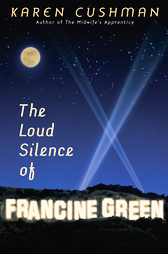
This is a Newber Honor book.  You can learn more about Karen Cushman by visiting her website at http://www.karencushman.com/index.html.  Other books she has written are The Midwife's Apprentice, Alchemy and Meggy Swann, and The Loud Silence of Francine Green.


Saturday, May 21, 2011

Bud, Not Buddy by Christopher Paul Curtis

Curtis, C.P.  (1999).  Bud, Not Buddy.  Delacorte Books for Young Readers.

After one night at the Amos', but decides that he is tired of being in and out of foster homes, so he decides to look for his father, and he has a good idea of where he can find him.  Will Bud find his father and the love he deserves?

Bud Caldwell is a 10-year-old orphan who lives in Flint, Michigan during the Great Depression. Since his mother died when he was six, Bud has been in and out of several foster homes, and he decides that enough is enough when Todd Amos, his foster brother at his most recent foster home, beats him up and makes it look like Bud beat him up. Instead of going back to the orphanage, which he calls The Home, Bud decides that it is time for him to run away and find his father, whom he has never met. The only clues he has are fliers advertising a band: Herman E. Calloway and the Dusky Devastators of the Depression. He knows that there is something about Herman E. Calloway, and he is certain that Herman is his father; there are just too many similarities between him and Bud. When Bud finally meets Mr. Calloway (as is proper for a child to call a grown-up), he is not met with welcome arms, and soon Bud discovers just how he and Mr. Calloway are connected, and it is not at all what he thought. In the process, he discovers where he belongs, who he is, and finds that he is now surrounded by people who will love and care for him the way he deserves.

I think tweens will like this book because they can sympathize with Bud as he experiences different unjust situations. They also root for Bud as he defeats his enemies and gets closer to finding his father. As a teacher, I like that this book is historical fiction because we can discuss some of the historical aspects of the story such as the Great Depression, establishing unions, and pullman porters. It is also filled with figurative language and good vocabulary. We can also have great discussions about setting, characters, theme, and other literary elements.  The title refers to what Bud's mom told him:  that his name is Bud, and not Buddy, and he shouldn't let people call him anything other than his name.

This book is the winner of the Newbery Award and the Coretta Scott King Award.  Another book by Christopher Paul Curtis is The Watsons Go to Birmingham-1963.  Learn more about the author by visiting this website:  http://www.randomhouse.com/features/christopherpaulcurtis/index.htm.


Joey Pigza Swallowed the Key by Jack Gantos

Gantos, J.  (1998).  Joey Pigza Swallowed the Key.  New York:  HarperTrophy.

Joey has always had problems sitting still, and lately it's gotten worse, especially when his medication wears off before the ned of the day, and things never seem to work out right for him, even when he tries his hardest to stay calm, be still, and not cause any trouble.  Will he be able to get a hold of himself and get things right?

Joey Pigza has a hard time sitting still, paying attention, and following the rules. It's hard for him, especially when his medication wears off after lunch. Joey knows he is a good kid. His classmates and office staff like him, and he's a nice boy, but sometimes he just can't control himself, and that's when he gets in trouble or accidents happen. It seems like the harder he tries to do something good, something bad ends up happening instead, but it is not his fault. He just needs the right dose of his medicine. Mrs. Maxy, his teacher, and Mrs. Jarzab, the principal, say that the school downtown will help him learn to make good decisions, behave, and stay focused, but will going to that school really help Joey?  Joey promises his mom to try his best and then everything will go back to normal and he could go back to the way things were.  Working at the school and with his doctor, teacher, and mom, Joey gets what he needs and is able to help himself concentrate, stay calm, and stay focused, but he knows that he has to keep it up, not give up, and always try his best.
I could not help rooting for Joey! He seems like someone I would have wanted to know: nice, funny, and not afraid to tell people what is on his mind. He really is a good kid, and he does try hard to be good and stay out of trouble, but he can't help it when things go wrong. I think students would also root for Joey and even laugh as he gets himself into a few sticky situations and tries to get out of them.  The title of this book refers to a scene in the book where Joey swallowed his house key.

This book was a National Book Award Finalist.  Another book about Joey Pigza is Joey Pigza Loses Control, which is a Newbery Honor book.  Visit http://www.jackgantos.com/ to learn about the author.  In addition to the Joey Pigza books, Jack Gantos also wrote young adult novles which include The Love Curse of the Rumbaughs, Hole in My Life, and Desire Lines.


Forever by Judy Blume

Blume, J.  (1975).  Forever.  Bradbury Press.

High school seniors Katherine and Michael are sure that they're going to love each other forever, but will a summer apart change their relationship?

Katherine and Michael meet at a party at Erica's (Katherine's friend) house, and at first, she isn't interested in him, but she changes her mind when he learns that Michael asked her last name and phone number.  Katherine and Michael start dating.  She is cautious because her previous boyfriend only dated her because he thought she would have sex with him, which she does not.  Gradually Katherine's and Michael's relationship grows, but whenever things go too far for her, sexually, she stops Michael.  Katherine wants to make sure she's ready for sex, both physically and mentally, and Michael understands.  Later, Michael invites Katherine to go skiing in Vermont with his sister and her husband.  When she asks her parents for permission, they tell her that they'll need to seriously think about it, and she understands.  They give her permission to go, and in Vermont, Katherine's and Michael's relationship escalates.  Michael tells her that he loves her.  Katherine isn't ready to say this back to Michael, but she does know that she cares about him.  They end up falling asleep in each other's arms.  They spend the next day skiing (Michael teaches Katherine), and later Michael's sister tells Katherine that she cares about her brother and doesn't want to see him get hurt.  Katherine realizes that she loves Michael, and later they have sex.  When they return, Katherine's parents are concerned that their relationship is getting a bit too serious and that they're too young to get so serious.  Katherine and Michael are separated that summer.  They will both be working and will not be able to see each other or spend time together.  Katherine feels that they're growing apart, and there are other love interests for them.  Katherine and Michael both realize that what they had together was a good thing, but their relationship has to end.  They'll both be going away to college and will meet other people, but they will always have what they had. 

As I was reading this book, I kept expecting Katherine to get pregnant, but that didn't happen.  This book was simply about young love.  Two teenagers took their relationship to the next level.  Katherine didn't do anything she wasn't ready for, and she didn't let anyone pressure her into doing anything she didn't want to do.  Michael didn't pressure Katherine either.  He respected her decision to wait.  They loved each other and did what they did out of love for each other.  This is something I really liked about this book.  It was a story about two young people who showed their love for each other.  The title refers to how long Katherine and Michael will love each other (forever).

Judy Blume received the Edwards Award for this book.  Learn more about her by visiting her website at http://www.judyblume.com/home.php.  You will also see a list of her books, which include the Fudge Series, Are You There, God?  It's Me, Margaret, and Tiger Eyes. 


Friday, May 20, 2011

Dear Mr. Henshaw by Beverly Cleary

Cleary, B.  Dear Mr. Henshaw.

Mr. Boyd Henshaw has been Leigh Botts' favorite author since second grade.  Read this book to find out how Mr. Henshaw and Mr. Fridley (the custodian) help Leigh deal with some personal issues he is having.

It started in second grade when Leigh Botts' teacher read his class a book by Mr. Boyd Henshaw, who became Leigh's favorite author. Leigh continues to write to Mr. Henshaw, and when he gets to sixth grade, he has an assignment to write about a favorite author, so he automatically thinks about Mr. Henshaw and asks him about his life and career. Mr. Henshaw advises Leigh to keep a journal to help with his writing. It is through these letters and Mr. Henshaw's responses that Leigh deals with his parents' divorce, being the new kid in school, and not having any friends (except Mr. Fridley the custodian), and trying to figure out who is taking his lunch. This book is told through Leigh's letters to Mr. Henshaw and entries in Leigh's journal. These letters, his journal, and Mr. Fridley help Leigh realize that if he wants things to change, he is going to have to change a little bit of himself as well. Things will not happen unless he does something to help make them happen.
I liked the way this book was written-a series of letters and jounal entries. We never actually read Mr. Henshaw's responses to Leigh's questions or letters, but we infer what he said from Leigh's other letters. I think this is a good book to read if someone is dealing with divorce and being new to a school. Things will not just be handed to you simply because you want them; you have to work at what you want to get what you want.  The title refers to how Leigh starts his letters to Mr. Henshaw and how Leigh looks to Mr. Henshaw for solace, comfort, and advice with the different events that are happening to him and around him.

This book won the John Newbery Award.  Learn about Beverly Cleary by visitng her website at http://www.beverlycleary.com/.  Click on the books tab to see other books she has written including the books of the Ramona Series, The Mouse and the Motorcycle, and Henry and Ribsy.